5 Signs It's Time for Couples Therapy in New York
Not sure whether your relationship needs support? These five signs can help you decide when couples therapy may be worth considering.

Why doesn't healthier behavior always feel better?
One of the stranger experiences in personal growth isrealizing that the healthier response can feel awful the first few times youtry it.
A One leaves something imperfect and feels irresponsible. ATwo says no and feels selfish. A Three slows down and feels lazy, or worse,irrelevant. A Five participates more fully and feels exposed. A Six makes adecision before reaching total certainty and feels reckless. An Eight softensand feels vulnerable. A Nine states a strong preference and feels like they'vejust caused a problem.
We tend to assume healthy behavior should feel immediatelypeaceful and right — authentic, even. Often it doesn't. Sometimes growth feelswrong for the simple reason that your nervous system has just stepped off thepath it knows best.
Familiarity carries enormous power
The more you repeat a response, the easier it becomes toaccess. Over time you know how to inhabit it — you recognize yourself insideit. It's predictable, and predictability has a regulating quality all its own,even when the pattern itself is what's causing you pain.
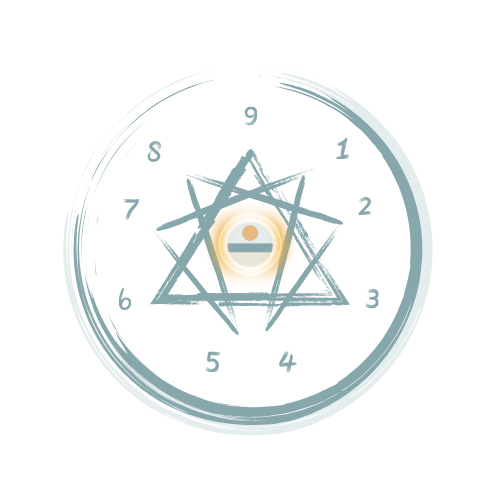
That's part of why familiarity gets so easily mistaken forauthenticity. "I've always done this" quietly turns into "thisis just who I am." The Enneagram is useful here precisely because it helpsseparate your deeper capacities from the automatic strategies you've simplylearned to lean on.
The nervous system may interpret change as risk
Say you learned early on that staying tuned in to everyoneelse's needs was what kept you connected to people. Now, as an adult, you startpracticing boundaries. Intellectually, it makes complete sense. Somatically,something else entirely happens — your stomach tightens, guilt creeps in, andyour mind starts building a case for why you should probably just take it back.
That discomfort isn't necessarily telling you the boundaryis wrong. It's more likely showing you what your nervous system has longassociated with safety and belonging.
Neuroplasticity depends on new experience
Neuroplasticity is what lets the brain and nervous systemchange through experience — but the new response almost always has far lesspractice behind it than the old one. The old pattern might have decades ofrehearsal. The new behavior might have a few weeks. Of course it takes moreconscious effort. Of course it feels less natural at first.
The real question becomes: can you stay present long enoughto actually find out what happens when you choose differently? That experience,however uncomfortable, is what creates the new learning.
Prediction error helps the brain update
Part of how learning works is something called predictionerror — the gap between what your brain expected to happen and what actuallyhappened.
A Two says no, bracing for rejection, and the relationshipstays intact. A Six makes a decision without polling five more people first —uncertainty is still there, but they handle what comes of it. A Nine voicesreal disagreement, maybe there's some friction, but the connection survives itanyway. An Eight lets someone see something tender in them and discovers thatvulnerability doesn't automatically hand someone else power over them.
Each of these experiences chips away at part of the oldprediction. One instance won't undo decades of learning on its own — butrepeated experiences start to add up into real evidence.
Growth becomes embodied through repetition
Eventually, something that used to take enormous effortstarts to feel more available. The boundary feels less foreign. The pausearrives sooner. The hard conversation feels more possible than it used to. Thebody braces less hard against it.
A new response slowly earns its place in your repertoire.This is where neuroplastic growth starts to genuinely reshape identity — whatonce felt like "that's not me" can, gradually, become "this isalso who I am."
Enneagram growth is an expansion of possibility
The Enneagram is most useful when it helps you become lessidentified with the automatic version of your personality — not when it asksyou to abandon the gifts of your type altogether. Growth just means buildingenough flexibility that the familiar strategy stops being the only wayyou know how to respond.
The work is noticing the pattern, understanding what it'sprotecting, feeling how it actually lives in your body, and practicingexperiences that stretch what feels possible. Sometimes the unfamiliarityitself is part of the process — your nervous system is simply finding a routeit hasn't traveled enough yet to call home.
My Enneagram Blueprint Intensive brings together type andsubtype, developmental patterns, somatic awareness, nervous-system triggers,and neuroplastic practice to help turn that kind of insight into change you canactually feel and live from.