Why Enneagram Growth Can Feel Wrong | Neuroplasticity
Healthier responses can feel unfamiliar at first. Learn why Enneagram growth may feel wrong before new patterns become embodied and natural.


You do not have to wait for a relationship crisis
Most couples I see didn't come in until the relationship had already reached a breaking point — years of resentment, defensive habits, distance, and unresolved hurt had already piled up by the time they walked through the door.
Therapy absolutely helps during that kind of serious distress. But it can be just as valuable much earlier, back when both partners can already sense that something is off and just want help making sense of it before it calcifies. Here are five signs worth paying attention to.
1. You keep having different versions of the same fight
Maybe the topic is money one week, parenting the next, then sex, then household chores, then how little time you're spending together. The subject keeps rotating, but the emotional structure underneath it barely moves.One of you feels criticized. The other feels dismissed. One pursues, the other withdraws. One gets louder, the other shuts down. Eventually you can probably predict, almost word for word, exactly how the conversation is going to end before it starts.
That predictability isn't a coincidence — repeated conflict patterns become more and more automatic over time, to the point where your nervous system starts anticipating your partner's next move before the interaction has even really unfolded. Couples therapy can help you find the pattern hiding underneath the topic and start interrupting it earlier, before it runs its full course.
2. You avoid difficult conversations because they never go well
Some couples fight often. Others quietly stop bringing anything difficult up at all — and both can be signs that something's wrong. If either of you has learned that raising a need tends to lead to defensiveness, escalation, shutdown, or a few days of cold distance, avoidance can start to feel like the safer option.
But unresolved issues rarely just evaporate. More often they resurface as resentment, distance, irritability, loneliness, or a slow fade intimacy. Couples therapy gives you a structured space to slow those conversations down enough that each of you can actually hear what's happening underneath the reaction, instead of just bracing for it.
3. You feel more like roommates than partners
Relationship distress doesn't always look dramatic —sometimes it's just quiet. You manage the household, coordinate the calendar ,handle the kids, cover the bills, keep everything running. You might rarely even fight. But somewhere along the way, the curiosity, the affection, the playfulness, the sexual connection — it's faded into the background.
Feeling like roommates doesn't automatically mean the relationship is over. More often it means the partnership has been stuck in maintenance mode for too long. Therapy can help you both look at what's actually been lost, what each of you is quietly longing for, and what's been making real closeness so hard to access lately.
4. Trust has been injured
Infidelity is the most obvious rupture, but it's far from the only one. Secrets, broken agreements that keep repeating, substance use, financial dishonesty, emotional affairs, chronic unreliability, or years offeeling emotionally abandoned can all shake a relationship's underlying sense of safety just as much.
Once trust has taken a hit, reassurance on its own usually isn't enough to fix it. The injured partner may stay hypervigilant no matter what's said. The other partner may get frustrated that nothing seems toactually repair the damage. Real healing takes both accountability and a slow, steady accumulation of trustworthy experience — and couples therapy can help you understand what genuine repair actually requires, instead of circling the same wound again and again.
5. You still love each other — but don't know how to get unstuck
This might be the most important reason to come in. You may genuinely still love each other. You may still want this relationship, fully.And yet the tools you've been relying on just aren't working anymore.
Love and relationship skill aren't the same thing. Two people can care enormously about each other and still keep landing directly oneach other's deepest vulnerabilities, over and over, without meaning to.Learning to recognize those vulnerabilities — and respond to them differently —can genuinely shift the entire emotional climate of a relationship.
You don't need to identify "the bad guy"
I work with the relationship as a system, not as one person's fault and one person's grievance. What happens to each of you when theother gets activated? What is each nervous system bracing for? How does each of you protect yourself — and how does one person's protection end up triggering the other's?
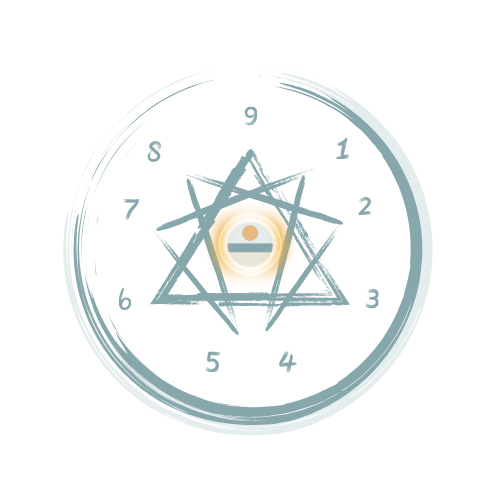
I draw on attachment-oriented couples work, emotional regulation, accountability, somatic awareness, and — when it's useful — the Enneagram, to understand the personality structures each of you brings into the room. Understanding why a behavior happens never cancels out responsibility for its impact. Compassion and accountability can live in the same conversation.
Online couples therapy in New York
Couples therapy gives you a place to slow down patterns that have gotten too fast to see clearly from the inside. You don't have to wait until things hit a breaking point — sometimes reaching out while there's still love, motivation, and curiosity in the room is exactly what gives a couple the most room to build something different.
I offer online couples therapy to couples throughout NewYork. If you're wondering whether it might help your relationship, you're welcome to schedule an initial consultation to learn more about how I work.